In rural Zimbabwe, the distance between a learner’s potential and their opportunity can be vast. National Development Network (NDN) is a grassroots organisation working to close that gap. Founded by development practitioner Edith, who saw firsthand that rural communities had land, resilience, and talent, but lacked access to the knowledge and resources to turn those into lasting change.
NDN’s work spans three areas: education, livelihood, and sexual and reproductive health rights (SRHR). In schools, they build learner confidence and fill the gaps formal curricula miss; career guidance, public speaking, and honest conversations about SRHR. In communities, they train youth, women, men, and people with disabilities in income-generating skills. And through their SRHR work, they equip rural communities with the knowledge to understand and advocate for their own rights, in contexts where early marriage and gender-based violence remain serious concerns.
Notably, NDN’s programmes are inclusive by design. “Development is inclusive, it includes everyone,” says Edith. “In as much as we want to empower the female gender, the male gender should also be part and parcel of these programmes.”
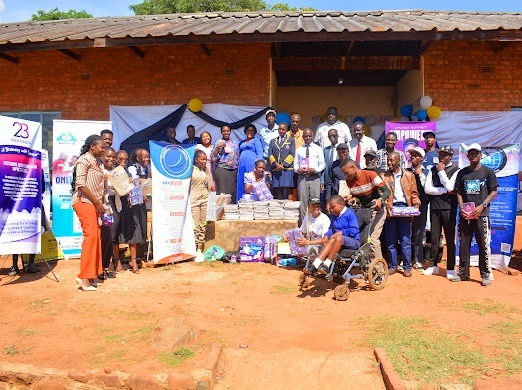
Still a growing organisation relying largely on internal subscriptions, NDN has nonetheless made a real mark. Their “23rd Touch” initiative, inspired by Edith’s belief that her birthday should be an occasion to give, has delivered stationery and sanitary pads to rural schools, attracted support from a local MP, and set the stage for a library development drive. They’ve hosted a Back to School Empowerment Programme, and are currently sponsoring the school fees of a young girl in their community, term by term.
Collaboration has been central to making this possible from board members offering governance guidance, to university clubs and private sector partners co-funding initiatives. “Collaboration lessens the burden,” Edith reflects, “and leads to the progression of programmes.”
Looking ahead, Edith envisions NDN expanding across Africa, growing into an organisation that reaches rural communities in multiple countries. But the heart of the vision remains the same: not to create dependency, but to build resilience. “After empowerment,” she says simply, “they must be able to stand on their own.”
To learn more about National Development Network or to support their work, reach out to the organisation directly.