Eight months. That’s how long it took a man who had never set foot in a Ugandan classroom to go from speaking no English at all to leading conversations, coordinating donors, and building an organisation that now touches thousands of lives. His name is Ntabaza Chirimwami Micheal, and his story is the engine behind one of Rwamwanja’s most quietly powerful community movements.
Tucked within the Rwamwanja Refugee Settlement in Kamwenge District, Ogandaze Africa Foundation is proving that some of the most powerful solutions to poverty and unemployment come from the communities living closest to the problem.
Founded in 2022, the refugee-led organisation was born out of necessity and out of Ntabaza’s own journey. A Congolese refugee and native French speaker, he arrived in Uganda unable to speak English and without access to formal schooling. Determined to adapt, he joined an English-language club and, in just eight months, taught himself to communicate fluently in a language that wasn’t his own.
“I never went to school. I never attended any school in Uganda,” Ntabaza shared. “Now, coming to the pressing problems, including me, we have been facing, we created this community-based organisation to support our fellow people.”That lived experience shapes everything the Foundation does today.
A Mission Rooted in Empowerment
Ogandaze Africa Foundation exists to combat extreme poverty and unemployment among women, girls, men, and the most marginalised members of society, with a particular focus on households surviving on $2 or less a day.
Its work runs across four core programs: Youth Skills Development, a Community Green Skills Hub focused on regenerative agriculture, Business Development through Financial Inclusion, and Environmental Restoration. Each designed to move people from vulnerability to self-sufficiency.
Building Entrepreneurs, One Step at a Time
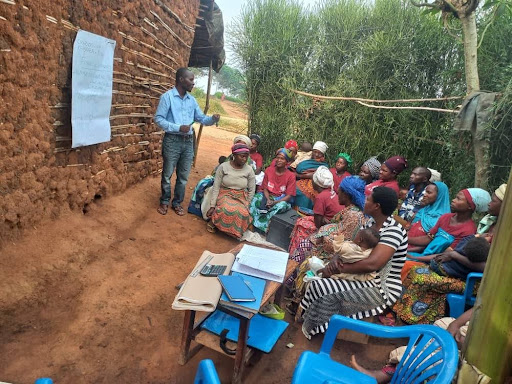
The Foundation’s approach is intentionally layered. It starts by identifying the most vulnerable individuals in the community, working closely with local stakeholders. From there, participants move through conflict management and resolution, village savings and loan associations, financial literacy training, business development, career guidance, and long-term business coaching.
“If a participant has gone through this kind of support, this kind of training, on our side we believe this person is powerful, is empowered, is able to do what he is supposed to do,” Ntabaza explained.
Women and Youth at the Center
For Ogandaze Africa Foundation, real economic change starts with the people too often left out of the conversation. Guided by a philosophy of community-based empowerment, the organisation sees women and youth as the true drivers of local economic stability. Their businesses ripple outward to connect local, national, and even international markets, while knitting refugee and host communities together through shared opportunity rather than division.
Lessons from the Ground
Community work, Ntabaza is quick to note, comes with both triumphs and tensions. Around Rwamwanja, refugees and Ugandan nationals increasingly share resources: nationals run businesses inside the settlement, refugees operate businesses in host communities, and land and services move fluidly between the two groups. Of the 25 community groups the Foundation supports, some are intentionally mixed, while others serve refugee populations exclusively.
That collaboration extends beyond individual communities, with refugee-led organisations across the Rwamwanja network regularly stepping in to support one another where gaps exist, bolstered by Uganda’s relatively flexible policy environment and strong UNHCR support for localization. Not every relationship is seamless, and pockets of tension still exist. But the overall trajectory, Ntabaza says, points toward deeper collaboration and mutual trust.
A Vision for the Future
Looking ahead, Ogandaze Africa Foundation is clear-eyed about what it hopes to achieve: a future where women, girls, men, and marginalised people across the refugee and host communities become economically independent, self-reliant leaders of change.
To get there, Ntabaza is candid about what matters most; not just funding, but trust.
“If you give me money without trusting me, that partnership doesn’t make sense,” he said. “When you trust Ogandaze Africa Foundation, you give us flexible funds. You give us a seat where we can express our problems and what kind of solution we need to support our communities.”
It’s a simple but powerful ask: partnership, not just patronage. And for an organisation built by refugees, for refugees, it’s a fitting way to define what real, sustainable change looks like.